
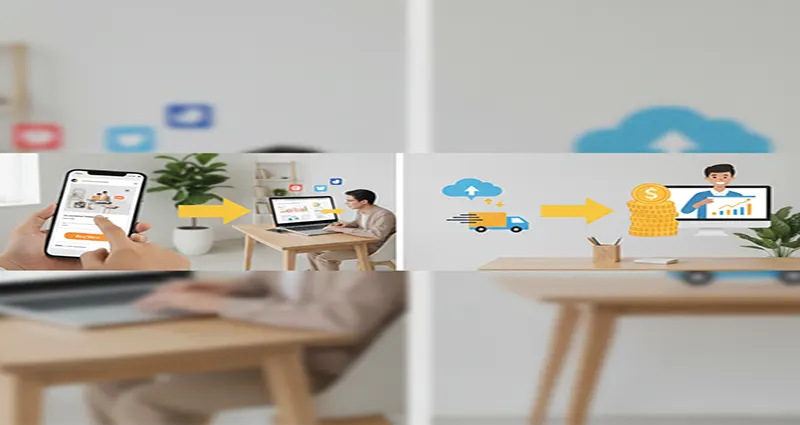
Starting an online retail business traditionally required a substantial upfront investment in inventory, warehousing, and logistics—a high-risk barrier for new entrepreneurs. However, the rise of powerful e-commerce platforms and global supply chain solutions has created a revolutionary model: the zero-inventory online retail business. This approach minimizes financial risk, maximizes flexibility, and allows you to focus purely on branding and customer acquisition.
The success of a zero-inventory model hinges on selecting the right fulfillment strategy and building a strong brand around it. Below are the three most viable and successful models and the steps to launch your business.
The Three Core Zero-Inventory Models
- Dropshipping:
- The Model: You list a supplier’s product on your online store. When a customer buys it, you purchase the item from the supplier (at a wholesale or discounted price), and they ship it directly to the customer.
- The Advantage: Lowest startup cost. You never touch the product, eliminating inventory storage and shipping logistics entirely. This allows for vast product variety and quick testing of new niche markets.
- The Key Challenge: Supplier reliability is critical. Shipping times and product quality are out of your direct control, making supplier vetting and transparent communication with customers paramount.
- Print-on-Demand (POD):
- The Model: You create unique designs (e.g., artwork, slogans) and apply them digitally to blank products (T-shirts, mugs, phone cases). The product is only printed, fulfilled, and shipped by a third-party service (like Printful or Printify) after a customer places an order.
- The Advantage: Brand originality and creative control. Since the design is yours, you own the product and can build a unique, recognizable brand with high-margin custom merchandise.
- The Key Challenge: Design quality is everything, and profit margins per item are generally lower than bulk wholesale due to single-unit production costs.
- Digital Products:
- The Model: You sell assets that are downloaded instantly by the customer—eBooks, online courses, templates, stock photography, or printables (like planners and checklists).
- The Advantage: Highest profit margin. Once created, the product is infinitely scalable with zero production or shipping cost per sale. This is a true source of passive income.
- The Key Challenge: Requires an initial investment of time and expertise to create a high-quality, valuable product that solves a specific customer problem.
4 Steps to Launching a Successful Zero-Inventory Business
- 🎯 Find Your Niche and Validate Demand: A general store is difficult to market. Success in zero-inventory retail comes from catering to a specific audience (e.g., minimalist coffee lovers, new parents interested in sustainable living). Use tools like Google Trends, Amazon Bestsellers, or Etsy to confirm that people are actively searching for and buying products in your chosen niche. Your niche defines your marketing.
- 🛍️ Select Your Platform and Service Provider: Choose an e-commerce platform (like Shopify or WooCommerce) to build your store, then integrate it with your chosen fulfillment partner (dropshipping wholesaler, POD provider, or digital download service). Seamless integration ensures orders are automatically processed without manual intervention.
- 🎨 Build a Powerful, Trustworthy Brand: Since you aren’t handling the physical product, your brand’s voice, aesthetic, and customer service are your competitive edge. Invest time in high-quality product photography (or mockups), detailed and honest product descriptions, and a smooth, professional website design to build trust.
- 📣 Master Customer Acquisition (Marketing): Your core job is driving traffic to your storefront. Start with low-cost, high-return strategies:
- Content Marketing: Create valuable blog or social media content relevant to your niche (e.g., “5 Best Sustainable Travel Hacks” to promote dropshipped eco-friendly gear).
- Targeted Ads: Use Facebook or Google Ads to test small budgets against hyper-specific demographics.
A zero-inventory model provides the framework for a low-risk, scalable online business. By focusing your capital and energy on marketing and customer experience, you can turn a virtual storefront into a highly successful reality.

