
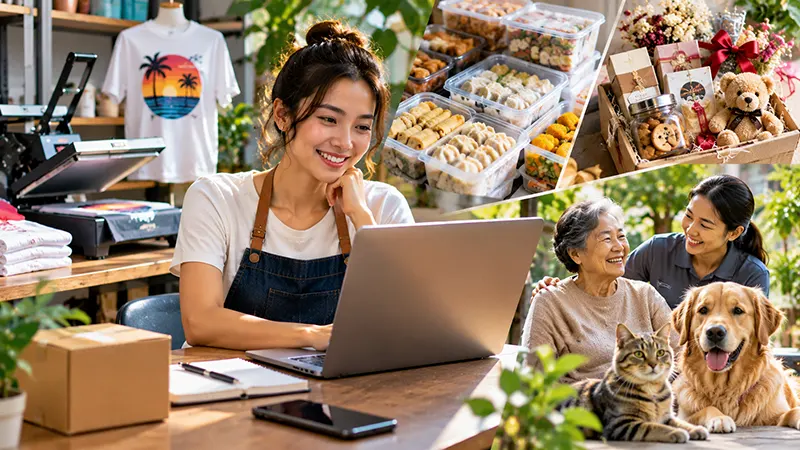
Starting a home-based business does not necessarily require a large investment, expensive equipment, or substantial inventory. Today, entrepreneurs can build profitable businesses by combining home operations with online marketing and local customer demand.
Hybrid and product-light business models are particularly attractive for beginners because they offer flexibility while reducing some of the financial risks associated with traditional retail businesses. Instead of maintaining large inventories or renting commercial premises, entrepreneurs can operate from home, accept pre-orders, produce items in small batches, and reach customers through digital platforms.
From print-on-demand merchandise and specialty frozen food to personalized gift hampers and local pet care, several business opportunities allow entrepreneurs to start small and expand gradually.
Here are four practical home business ideas worth exploring.
Print-on-Demand Merchandise Business
Print-on-demand (POD) is an attractive business model for creative entrepreneurs who want to sell customized products without maintaining physical inventory.
Instead of purchasing hundreds of printed shirts or accessories in advance, sellers work with print-on-demand suppliers that manufacture products after customers place orders.
Popular merchandise includes:
- Customized T-shirts and hoodies.
- Personalized mugs and tumblers.
- Tote bags and shopping accessories.
- Decorative wall prints.
- Phone cases and laptop accessories.
- Customized gifts for special occasions.
Entrepreneurs can create designs using tools such as Canva or professional graphic design software. Products can then be listed on online marketplaces or promoted through social media.
The main advantage is reduced inventory risk. Sellers do not need to store large quantities of finished products or manage complicated fulfillment operations.
To stand out, focus on specific customer groups, such as pet owners, fitness enthusiasts, local communities, or hobby-based audiences. Specialized designs often provide stronger branding opportunities than generic merchandise.
Specialty Frozen Food and Pre-Order Catering
Food businesses remain attractive because they serve everyday consumer needs. However, traditional food operations can require significant investment in equipment, ingredients, storage, and commercial space.
A home-based specialty food business can reduce some of these expenses by operating through pre-orders and producing limited quantities.
Potential products include:
- Frozen dumplings and spring rolls.
- Homemade meatballs and ready-to-cook meals.
- Frozen pastries and desserts.
- Specialty sauces and marinades.
- Family-sized meal packages.
- Small-event catering packages.
The pre-order model allows entrepreneurs to estimate demand before purchasing ingredients and preparing products. This can reduce food waste and improve inventory management.
Social media platforms, WhatsApp Business, and local community groups can help attract customers.
Food entrepreneurs should prioritize product consistency, hygienic preparation, appropriate packaging, temperature control, and food safety requirements. They should also check local licensing and home-food business regulations before selling.
Personalized Gift Hampers and Custom Packages
Personalized gift hampers offer another opportunity for entrepreneurs who enjoy creative work and product presentation.
Customers frequently purchase customized gifts for birthdays, weddings, anniversaries, corporate events, holidays, and other celebrations.
Rather than maintaining a large inventory, entrepreneurs can operate through a catalog-based pre-order system.
Possible hamper categories include:
- Birthday gift boxes.
- Corporate appreciation packages.
- Wedding and anniversary hampers.
- Newborn celebration gifts.
- Holiday-themed gift collections.
- Premium snack and beverage baskets.
Entrepreneurs can source products from local suppliers and assemble packages at home after receiving confirmed orders.
Personalization can increase the perceived value of a gift. Customized packaging, greeting cards, product combinations, and attractive presentation help differentiate the business.
Photography is particularly important. High-quality product images can make social media promotions and online catalogs more appealing.
Partnerships with event organizers, bakeries, florists, and local businesses can also generate repeat orders.
Local Non-Medical Elder and Pet Care Services
Not every home-based business needs to sell physical products. Service-based models can also generate income through local demand.
Non-medical elderly assistance is one opportunity worth considering, particularly in communities where families need additional support for older relatives.
Possible services include:
- Companionship and social interaction.
- Grocery shopping assistance.
- Accompaniment on routine errands.
- Help with basic household organization.
- Scheduled check-in visits.
These services should remain clearly non-medical unless the provider has the appropriate professional qualifications and authorization.
Pet care is another promising local service opportunity.
Busy pet owners may need assistance with dog walking, pet sitting, feeding visits, or basic daily care when they are working or travelling.
Entrepreneurs can promote these services through neighborhood groups, community platforms, and local partnerships.
Trust, reliability, safety procedures, and clear communication are essential for both elderly assistance and pet care.
Combine Local Marketing with Online Sales
One of the strongest advantages of hybrid businesses is the ability to serve both nearby customers and online audiences.
A home-based food business, for example, can receive orders through WhatsApp while promoting weekly menus on Instagram.
A personalized gift business can serve local customers through direct delivery while accepting orders from customers in other areas through online marketplaces.
Entrepreneurs should consider several practical marketing channels:
- Instagram and TikTok for product discovery.
- Facebook groups for local communities.
- WhatsApp Business for customer communication.
- Google Business Profile for eligible local businesses.
- Online marketplaces for broader customer reach.
Consistent branding, customer reviews, attractive photography, and responsive communication can help build trust.
How to Start with a Manageable Investment
Starting small is generally a sensible approach when testing a new business idea.
Begin by selecting one product or service category and identifying a specific target audience.
Next, calculate startup expenses, including equipment, materials, packaging, marketing, delivery, and software subscriptions.
Test customer demand through a small product collection, limited pre-order campaign, or introductory service package.
Track revenue, operating expenses, customer acquisition costs, and actual profit rather than focusing only on sales volume.
Once demand becomes consistent, gradually introduce additional products or services.
Resume
Hybrid and product-light home businesses offer practical opportunities for entrepreneurs who want to combine local customer demand with online sales channels.
Print-on-demand merchandise, specialty frozen food, personalized gift hampers, and non-medical elder or pet care services each provide different ways to start a business without immediately investing in extensive inventory or commercial premises.
The most effective strategy is to identify a genuine customer need, validate demand, control operating expenses, and build a reliable reputation.
By starting with manageable operations and expanding according to customer demand, entrepreneurs can develop flexible home-based businesses with opportunities for sustainable long-term growth.

